How to File Schedule F Using Your Farm Records
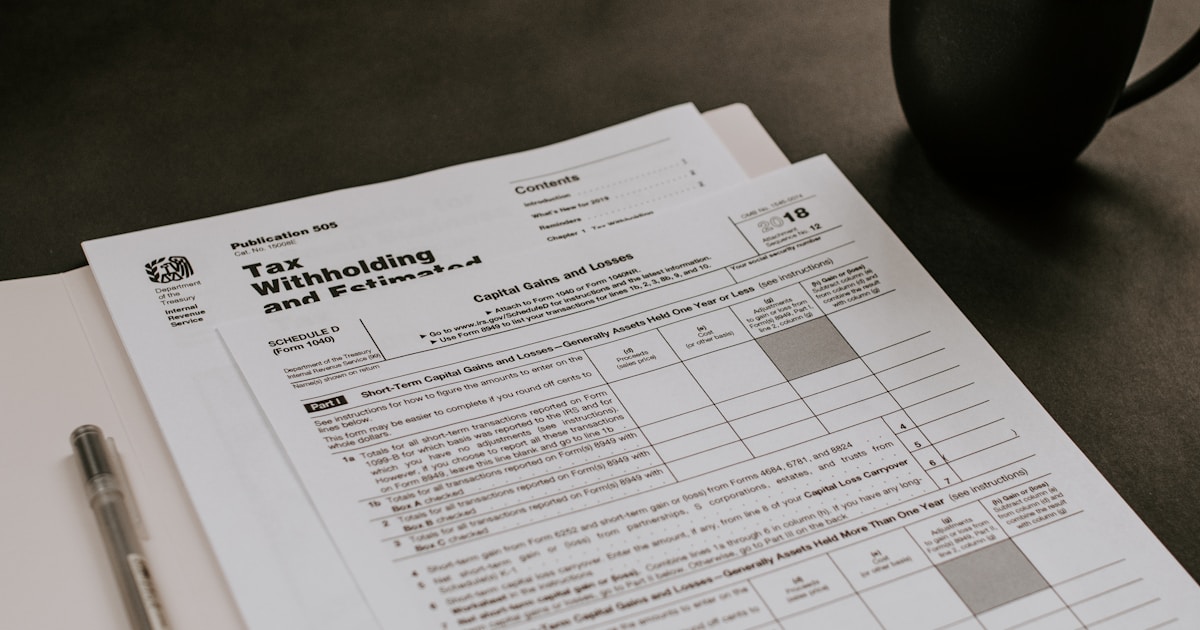
It's April 14th. You're sitting at the kitchen table with a blank Schedule F form, a pile of disorganized receipts, and a growing sense of dread. Line 2 asks for "Sales of livestock and other resale items." You sold some animals this year — you think six, maybe seven — but the amounts are scattered across Venmo payments, cash in an envelope, and one check you can't find.
Schedule F is the most important tax form for American livestock farmers, and it's also one of the most misunderstood. But if you've been keeping decent records throughout the year, filing Schedule F is straightforward. And if your records are a mess, this guide will show you what to organize so next year is different.
Important disclaimer: This article is educational content only and does not constitute tax, legal, or financial advice. Tax rules change frequently and individual circumstances vary. Always consult a qualified tax professional or CPA who specializes in agricultural taxation before making tax decisions. Livestock Runner is a record-keeping tool, not a tax preparation service.
What Is Schedule F?
Schedule F (Form 1040), titled "Profit or Loss From Farming," is the IRS form that sole proprietors and single-member LLCs use to report farm income and expenses. It attaches to your personal Form 1040 and calculates whether your farming operation generated a profit or a loss for the tax year.
If you raise livestock or operate any agricultural business as a sole proprietor, Schedule F is almost certainly your form. Partnerships and corporations use different forms, but the vast majority of small livestock operations file as sole proprietors.
Schedule F has two main parts:
- Part I — Farm Income: Where you report all money that came into the farm
- Part II — Farm Expenses: Where you deduct all ordinary and necessary business expenses
The difference between Part I and Part II is your net farm profit or loss, which flows onto your 1040 and determines how much tax you owe (or how much your farm loss offsets other income).
Who Needs to File Schedule F?
You need to file Schedule F if you meet all three conditions:
- You operate a farm. The IRS defines farming broadly — raising livestock, poultry, fish, or fur-bearing animals; growing crops, fruits, or vegetables; operating a nursery or greenhouse.
- You operate as a sole proprietor or single-member LLC. If your farm is a partnership or corporation, different forms apply.
- You are in the business of farming. This is the critical distinction. The IRS differentiates between farming for profit and farming as a hobby. If your farm has shown a profit in three of the last five years (two of seven years for horse operations), you're generally presumed to be a business.
If you're unsure whether your operation qualifies as a business or a hobby, consult a tax professional. The hobby-loss rules can significantly affect your deductions.
Part I: Farm Income Walkthrough
Part I of Schedule F captures all income your farm generated during the tax year. Here are the key lines:
Line 2 — Sales of Livestock and Other Resale Items
This line is for animals you purchased for resale — not animals you raised from birth. If you bought feeder calves at auction and sold them at a heavier weight, that revenue goes here. You'll report the cost basis on Line 3.
Line 3 — Cost or Other Basis of Livestock Sold
Report the original purchase price (plus any capitalized costs) of the animals you resold. The difference between Line 2 and Line 3 is your gross profit on resale livestock.
Line 4 — Sales of Livestock, Produce, Grains, and Other Products You Raised
Animals you raised from birth and sold — calves from your cow herd, kids from your does, puppies from your breeding program, eggs from your flock — go here. Getting the Line 2 vs. Line 4 distinction right matters because cost basis calculations differ.
Line 7 — Other Farm Income
This catches everything that doesn't fit Lines 1–6. Common items include:
- Breeding and stud fees
- Boarding and training income
- Custom hire work (using your equipment for others)
- Bartered goods and services (at fair market value)
- Insurance proceeds
- Lease income from farm equipment or pasture
Lines 5a and 5b — Cooperative Distributions and Agricultural Program Payments
If you received payments from agricultural cooperatives or government programs (like EQIP, CRP, or disaster assistance), they go here.
How records help: If you've been categorizing your income all year — animal sales separate from breeding fees separate from boarding income — filling out Part I is a matter of pulling your annual totals by category. No guessing, no estimating.
Part II: Farm Expenses Walkthrough
Part II is where you deduct all ordinary and necessary expenses of operating your farm. Each line corresponds to a specific expense type. Here are the major ones:
Line 14 — Car and Truck Expenses
You can use either the standard mileage rate or actual expenses, but you must keep a mileage log documenting date, destination, purpose, and miles for each farm trip.
Line 15 — Chemicals
Herbicides, pesticides, and other chemical treatments for crops or pastures.
Line 18 — Feed
For most livestock operations, this is the largest single expense — often 60–70% of total costs. Every bag of feed, bale of hay, mineral supplement, and salt block goes here.
Line 19 — Fertilizers and Lime
Costs of fertilizing and liming your pastures and crop fields.
Line 21 — Insurance (Other Than Health)
Liability insurance, property insurance, livestock mortality insurance, and other farm-related policies. Health insurance is handled elsewhere on your 1040.
Line 22 — Interest
Interest paid on farm loans, operating lines of credit, and equipment financing.
Line 25 — Repairs and Maintenance
Fence repairs, equipment maintenance, barn repairs, and other costs to keep existing farm assets in working condition. Note: improvements that extend the useful life of an asset may need to be capitalized and depreciated rather than expensed.
Line 26 — Seeds and Plants
Pasture seed, cover crops, and other planting expenses.
Line 27 — Storage and Warehousing
Costs for storing hay, grain, or other farm products.
Line 29 — Veterinary, Breeding, and Medicine
This is a big one for livestock farmers. Vet visits, vaccinations, dewormers, medications, breeding fees (when you're paying for outside services), AI costs, and all animal health expenses go here.
Line 32 — Other Expenses
Anything that doesn't fit Lines 14–29 gets itemized here. Common items include:
- Registration and breed association fees
- Show and competition entry fees
- Bedding and shavings
- Marketing and advertising
- Accounting and legal fees
- Small tools and supplies
You must itemize these expenses on Line 32, listing each category and amount separately.
How records help: If your expense categories align with Schedule F line items — and they should — tax preparation becomes a matter of transferring your annual category totals to the corresponding lines. This is why consistent categorization throughout the year is so valuable.
How Organized Records Simplify Filing
The difference between a painful tax season and a painless one comes down to one thing: record quality. Here's what organized records give you:
Instant Category Totals
When every transaction is categorized correctly, you can pull annual totals by category in seconds. Feed expenses? $12,340. Vet and medicine? $3,200. Animal sales? $28,500. Each number maps directly to a Schedule F line item.
Audit Protection
If the IRS questions a deduction, you need documentation. Organized records with attached receipts give you a defensible position. "I deducted $3,200 in veterinary expenses" is weak. "Here are 47 itemized vet transactions with dates, amounts, providers, and receipt images" is strong.
Per-Animal Profitability
While Schedule F reports farm-level totals, per-animal cost tracking helps you make better business decisions throughout the year. Knowing that your Angus cow herd generates $850 net profit per calf while your show goats cost $200 more to raise than they sell for changes how you allocate resources.
Year-Over-Year Comparison
With consistent records across multiple years, you can spot trends. Are feed costs rising faster than revenue? Is vet spending declining because of better preventive care? These insights drive better farm management and better tax planning.
Livestock Runner's accounting module is designed around this workflow. Every transaction is categorized, can be linked to specific animals, and maps to Schedule F line items automatically. The platform's Schedule F worksheet feature generates a report that organizes your annual totals by Schedule F line — so instead of combing through a year of records, you pull one report and transfer the numbers.
Common Schedule F Mistakes
Even experienced farmers make these errors:
- Mixing personal and farm expenses. That truck you use 50% for farm business? Only 50% of the expenses are deductible. Document the split.
- Missing the Line 2 vs. Line 4 distinction. Purchased-and-resold animals go on Line 2 (with cost basis on Line 3). Animals you raised go on Line 4. Mixing them up can trigger questions.
- Forgetting to report bartered income. If you traded hay for fencing labor, the fair market value of what you received is taxable income on Line 7.
- Not keeping a mileage log. Vehicle deductions without a contemporaneous mileage log are one of the most commonly disallowed deductions in farm audits.
- Expensing capital improvements. A new barn is a capital asset that must be depreciated over its useful life. A barn repair is a current expense on Line 25. The distinction matters.
- Ignoring depreciation. Breeding stock, equipment, fencing, and structures can all be depreciated, reducing your taxable income. But you need purchase records to claim it.
- Filing as a hobby. If your farm hasn't shown a profit in three of the last five years, the IRS may classify it as a hobby and disallow your losses. Keep records that demonstrate profit intent.
Working with a Tax Professional
Schedule F is manageable for small operations with clean records, but there's real value in working with a CPA or tax preparer who specializes in agricultural taxation. Farm tax rules have nuances — Section 179 expensing, depreciation methods, self-employment tax, estimated quarterly payments, conservation easements — that a generalist may not catch.
When you bring organized records to a farm-savvy CPA, your accountant can focus on strategy — timing asset purchases, optimizing depreciation, and ensuring you're not leaving deductions on the table — instead of sorting through your shoebox.
Remember: This article is for educational purposes only. It is not a substitute for professional tax advice. Tax laws are complex, change frequently, and vary by state. Consult a qualified tax professional for guidance specific to your situation.
Start Organizing Your Farm Records Today
If you're reading this in the middle of a stressful tax season, take heart — next year can be different. The key is building the habit of recording income and expenses as they happen, categorizing them consistently, and letting your records do the heavy lifting when Schedule F comes around.
Livestock Runner's farm accounting tools are built for this workflow. Pre-built categories map to Schedule F line items, and transactions link to individual animals for profitability tracking. The free plan supports up to 20 animals — enough to get started and build the recording habit.
Start your free Livestock Runner account and make next tax season the one where you sit down with organized records, a clear P&L report, and a Schedule F that practically fills itself out.
For more on setting up your farm accounting system, see our complete guide to farm accounting. And for tips on what records to keep for your livestock operation, check out our beginner's guide to livestock record keeping.